No products in the cart.

by
A Guide to Male Facial Aesthetics That Looks Natural
0 Comments

by
0 Comments
November 6, 2026 in Uncategorized
A strong result should not announce itself before you do. The best guide to male facial aesthetics begins with that principle: improving the features, skin quality, and overall balance that already make your face distinct, rather than pursuing a generic or overdone look.
For many men, aesthetic care is less about changing identity and more about looking rested, healthy, capable, and confident. It may mean softening a deep forehead line that makes you seem stressed, restoring subtle support after facial volume loss, addressing acne scarring, or treating hair thinning before it becomes a larger concern. The right plan is personal, medically guided, and built around results that still look like you.
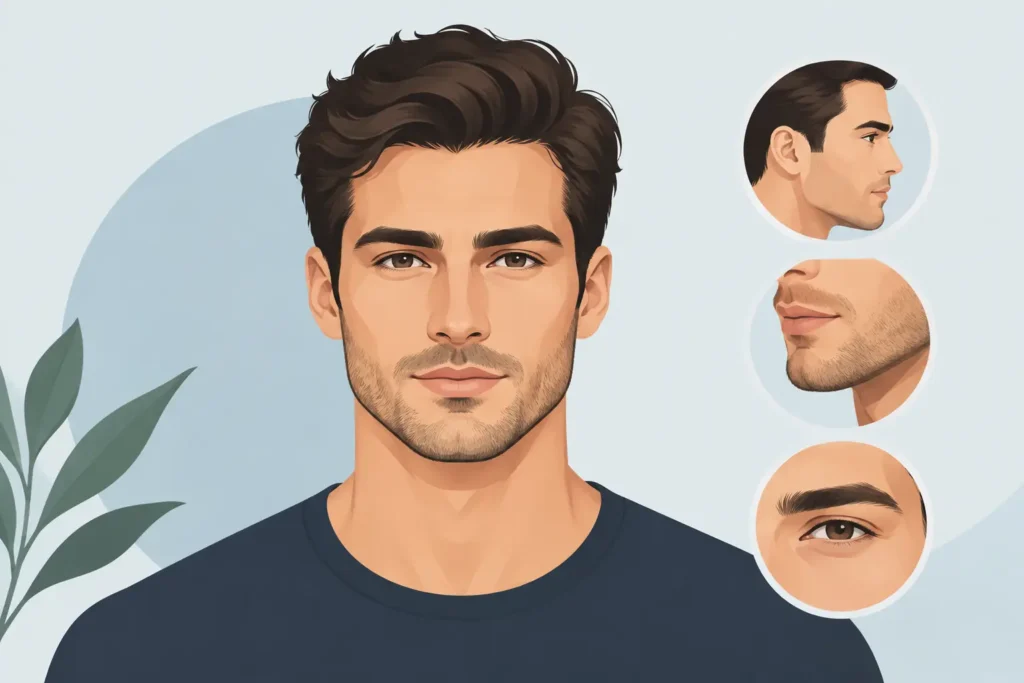
Male facial aesthetics considers the relationship between facial structure, skin condition, expression, and proportion. While every face is different, traditionally masculine features often include a defined jawline, a balanced chin, a brow that sits naturally over the eyes, and skin that looks clear and energized without appearing artificially altered.
This does not mean every man should aim for the same face. A square jaw may suit one person, while another looks most balanced with attention to the cheeks, under-eye area, or skin texture. Age, genetics, ethnicity, bone structure, lifestyle, and personal preference all matter. A physician-led assessment helps separate a realistic opportunity for refinement from a trend that may not suit your anatomy.
The goal is usually proportion, not perfection. Facial asymmetry is normal, and aggressively correcting every small difference can create a result that feels less natural. Thoughtful aesthetics respects movement, character, and the way a face changes when you speak or smile.
Healthy-looking skin is often the most effective place to begin. Even strong facial features can appear tired when skin is dull, uneven, congested, or marked by sun damage. Conversely, clearer and smoother skin can make a man look more refreshed without changing his facial structure at all.
A personalized skincare routine may focus on cleansing effectively, supporting hydration, improving cell turnover, protecting against UV exposure, and addressing specific concerns such as redness, acne, pigmentation, or fine lines. Medical-grade skincare can be particularly valuable when products are selected for a defined concern and used consistently rather than added randomly.
In-clinic treatments can complement home care. Microneedling may help improve the appearance of texture and acne scarring by supporting collagen production. IPL treatments can address visible redness and sun-related discoloration in appropriate candidates, while fractional laser resurfacing can be considered for deeper texture concerns, fine lines, and signs of photodamage. The best option depends on skin type, downtime tolerance, current skin health, and the concern being treated.
Skin improvement is gradual. A treatment that promises a dramatic overnight transformation is rarely the standard to use. Lasting, natural-looking refinement usually comes from a measured plan and consistent maintenance.
Dynamic wrinkles are created by repeated facial movement. Forehead lines, frown lines between the brows, and crow’s feet may become more noticeable over time, sometimes causing a person to look concerned, fatigued, or stern even when they feel relaxed.
Neuromodulator treatments, commonly known as Botox treatments, can soften these lines by reducing targeted muscle activity. For men, technique matters. Male facial muscles can be stronger, and the desired outcome often preserves a degree of natural movement rather than creating a completely still forehead.
A conservative approach is especially valuable for first-time patients. The objective is not to erase every line or remove expression. It is to soften the intensity of lines while maintaining a believable, rested appearance. Treatment can be adjusted over time after seeing how your facial muscles respond.
Facial volume naturally changes with age. The cheeks may flatten, the temples can become hollow, the jawline may lose definition, and the area around the mouth can appear heavier. In some cases, what looks like loose skin is partly a loss of underlying support.
Dermal fillers can restore or enhance structure when used with restraint. For men, common areas of consideration include the chin, jawline, cheeks, and temples. Chin enhancement may improve profile balance. Jawline treatment can create more definition in the right candidate. Cheek support can make the midface look healthier and can indirectly improve the appearance of lower-face heaviness.
More filler is not automatically better. An overly projected chin, excessively sharp jaw, or overfilled cheek can look out of proportion, particularly when the rest of the face has not been assessed. A medically trained provider should evaluate the full face in motion, not simply treat one feature in isolation.
There are also safety considerations. Injectable treatments require a detailed knowledge of facial anatomy, appropriate product selection, careful technique, and a plan for managing uncommon complications. This is why physician supervision and a comprehensive consultation matter.
The under-eye area is one of the first places people notice signs of fatigue. Dark circles, hollowing, puffiness, fine lines, and shadowing may all contribute, but they do not have one universal solution.
In some cases, improved sleep, hydration, allergy management, or skincare can make a visible difference. In others, skin rejuvenation or carefully selected injectable treatment may help. However, filler is not ideal for every under-eye concern. Puffiness, fluid retention, prominent bags, and certain anatomical patterns can make an injectable approach less suitable.
This is an area where a direct, honest assessment is more valuable than a quick treatment recommendation. The safest and most satisfying plan may involve treating the cheeks for support, focusing on skin quality, or deciding that no injectable treatment is appropriate.
Facial aesthetics does not stop at the jawline. Hair density and hairline shape influence how the entire face is perceived. Early thinning can make the temples appear more hollow or place greater emphasis on the forehead, while improved hair density can restore a more balanced frame.
PRP hair restoration uses concentrated platelets from your own blood to support the hair follicle environment. It may be considered for appropriate candidates experiencing early to moderate thinning, often as part of a broader hair-health plan. Results vary based on the cause and stage of hair loss, so evaluation is essential before treatment.
Beard grooming also plays a role. The right beard shape can emphasize the jaw, add visual balance to a narrower chin, or create structure in the lower face. It should complement your natural growth pattern rather than fight it.
The strongest aesthetic plans are phased. Starting with one or two priorities makes it easier to see what is helping, preserve a natural result, and avoid treating concerns that may improve once the face is better supported overall.
During a professional consultation, expect a conversation about your goals, medical history, medications, skin type, past treatments, and comfort with downtime. Photos may be used to assess proportion and track progress. A responsible provider should also explain what a treatment can do, what it cannot do, and when another option may be more appropriate.
For some men, the ideal first step is a skincare regimen and wrinkle-relaxing treatment. For others, it may be laser-based skin renewal, PRP for thinning hair, or subtle structural support with filler. There is no single formula, and the most compelling results rarely come from copying someone else’s plan.
At HealX Wellness, male aesthetic care is approached as a personalized medical experience, with attention to safety, facial anatomy, and the outcome you want to see in the mirror. Choose changes that make you look more like yourself on your best day: clear-eyed, well-rested, and confidently present.
About the author