No products in the cart.

by
IPL Versus Chemical Peel: Which Fits Your Skin?
0 Comments

by
0 Comments
November 8, 2026 in Uncategorized
Brown spots that linger after summer, facial redness that shows through makeup, acne marks that affect your confidence – these concerns can make choosing a treatment feel more complicated than it should be. In the IPL versus chemical peel decision, the right answer is rarely about which treatment is “better.” It is about what is driving your concern, how your skin behaves, and what level of downtime fits your life.
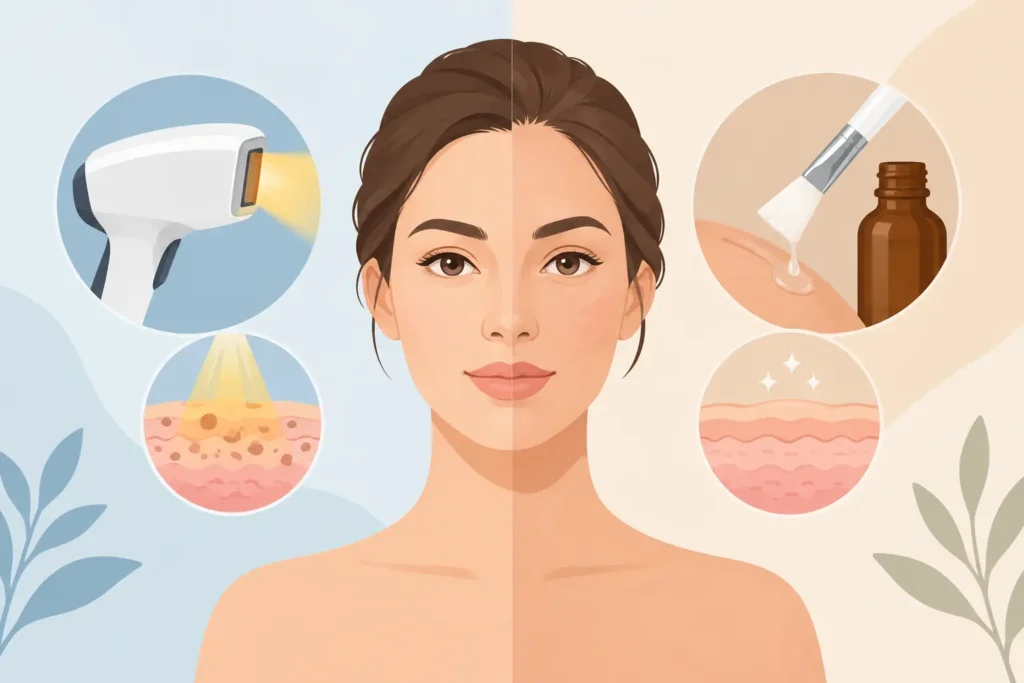
Both treatments can support clearer, brighter, more even-looking skin. Yet they work through different mechanisms. Intense pulsed light, commonly called IPL, uses targeted light energy to address pigment and visible blood vessels. A chemical peel uses a carefully selected solution to accelerate exfoliation and renewal at the skin’s surface. A physician-led assessment can determine which approach aligns with your skin tone, goals, medical history, and desired outcome.
IPL delivers broad-spectrum light that is absorbed by specific targets in the skin, primarily melanin in brown spots and hemoglobin in visible blood vessels. The light converts to heat, helping break up excess pigment and reduce the appearance of redness, sun damage, and certain vascular concerns. IPL is not technically a laser, although it is often grouped with laser-based rejuvenation treatments.
A chemical peel applies a controlled chemical solution to the skin. Depending on the formulation and strength, it loosens dead surface cells, stimulates skin renewal, and can reach different depths within the epidermis or dermis. Superficial peels typically focus on brightness, texture, and mild discoloration. Medium-depth peels may address more established pigment, acne scarring, or fine lines, but they require more recovery and careful clinical planning.
In simple terms, IPL is often selected for color concerns beneath or within the skin, particularly redness and sun-induced brown spots. Chemical peels are often chosen when uneven texture, breakouts, dullness, and superficial discoloration are central concerns. Many patients benefit from both at different points in their treatment plan, rather than viewing them as competing options.
IPL can be an excellent option when your skin concern is visible redness, broken capillaries, rosacea-related flushing, freckles, sun spots, or an uneven complexion caused by accumulated sun exposure. It is particularly effective for treating a mixed picture of red and brown discoloration in the same area, such as the cheeks, nose, chest, or hands.
After treatment, darker pigment may temporarily look more pronounced before it flakes away or gradually fades. Mild redness and warmth are also common, usually resolving quickly. The skin often looks clearer and more even over the following days and weeks, with results building through a recommended series of treatments.
IPL is not appropriate for every skin tone or every type of pigmentation. Because the device targets melanin, skin with more natural pigment can face a greater risk of unwanted darkening or lightening if treatment settings are not selected with exceptional care. Melasma also requires nuance. Heat-based treatments can worsen melasma for some people, even if they initially appear to improve discoloration. This is why a tailored consultation matters more than a one-size-fits-all treatment recommendation.
A chemical peel may be the stronger choice for acne-prone skin, congested pores, rough texture, dullness, fine lines, and post-inflammatory discoloration left behind after breakouts. Certain peel formulations can help regulate oil, promote more consistent cell turnover, and improve the way skincare products perform at home.
The experience and recovery depend on peel depth. A light peel can cause temporary dryness, tightness, and fine flaking, often with minimal disruption to daily activities. A deeper peel may create more obvious peeling, redness, and social downtime. More intensity is not automatically more effective. The best peel is one that delivers meaningful progress while respecting your skin barrier, schedule, and risk profile.
Chemical peels can also be highly adaptable for a broad range of skin tones when selected and prepared correctly. Patients who are prone to post-inflammatory hyperpigmentation need a thoughtful protocol, which may include pre-treatment skincare, conservative treatment intensity, and strict sun protection afterward. A peel should never be treated as a casual exfoliation service. It is a medical-grade procedure that requires the right formulation, timing, and aftercare.
Neither option produces a permanent result, because skin continues to age, respond to hormones, and experience environmental exposure. Both IPL and chemical peels work best as part of ongoing skin health, supported by consistent sunscreen use and personalized medical-grade skincare.
IPL generally involves a quick treatment session with a snapping or warming sensation. There is usually little downtime, though redness, mild swelling, and temporary darkening of spots can occur. People often choose it when they want to address redness and photodamage without significant peeling.
Chemical peel recovery is more variable. Some patients experience only mild dryness, while others have visible shedding for several days. The trade-off can be worthwhile when texture, acne, or superficial discoloration is the priority. You should not pick at peeling skin or try to speed the process with scrubs, retinoids, or active acids. That can compromise the skin barrier and increase the risk of irritation or pigmentation changes.
Results from both treatments are gradual. IPL pigment changes may become more noticeable as treated spots darken and clear. With peels, fresh, smoother-looking skin appears as the surface renews. A single session can make a visible difference, but a series may be recommended based on the concern being treated and the health of your skin.
These common concerns show why treatment selection must be precise. Acne scars can be textural, pigmented, or both. A peel may improve surface irregularities and post-acne marks, while treatments such as microneedling or fractional resurfacing may be considered for deeper textural scars. IPL can help residual redness after acne, but it does not erase indented scars.
Melasma is often hormonally influenced and easily triggered by heat, sunlight, and inflammation. Some patients may benefit from carefully chosen superficial peels and a pigment-control skincare plan. IPL can be helpful in selected cases, but it can also aggravate melasma, so it should never be approached casually.
For rosacea-related redness and visible blood vessels, IPL is often a valuable option because it can target vascular redness directly. Still, rosacea is a chronic inflammatory condition. Skincare, trigger management, and the right treatment cadence are just as important as the procedure itself.
The safest treatment plan begins with an honest discussion of your skin history. Share if you have had cold sores, keloid scarring, recent tanning, active skin infections, melasma, allergies, or a history of pigment changes after irritation. Let your provider know about prescription medications, retinoids, exfoliating products, and any recent aesthetic procedures.
Sun exposure deserves special attention. Tanned or sunburned skin is not an appropriate canvas for IPL, and it can complicate peel recovery as well. Broad-spectrum sunscreen, protective clothing, and limiting direct sun exposure are essential before and after either treatment. This is not simply maintenance – it protects your investment and helps reduce avoidable complications.
At HealX Wellness, physician-led care supports a treatment plan that considers more than the concern you see in the mirror. Skin type, underlying causes, seasonal timing, comfort with downtime, and your long-term goals all shape the recommendation.
Choose IPL when visible redness, sun spots, freckles, or diffuse photodamage are your leading concerns and your skin is an appropriate candidate for light-based treatment. Consider a chemical peel when acne, congestion, dullness, rough texture, or surface-level discoloration is the main focus.
If you have several concerns at once, do not assume you need to choose only one treatment forever. A strategic plan may alternate treatments over time, with proper spacing, to improve pigment, texture, and overall radiance without overwhelming the skin.
The most rewarding aesthetic treatments are not the ones with the boldest promise. They are the ones selected with care, performed safely, and integrated into a plan that helps your skin look healthy, balanced, and confidently your own.
About the author